ACM CCS 2026 · The Hague, Netherlands

Shoot the Honey, Cloak the Player

Towards Zero-Runtime-Overhead Proactive Defense and Detection for Visual Game Cheating

  1. Jianing Wang1
  2. Chuqi Zhang2
  3. Yuancheng Jiang3
  4. Adil Ahmad4
  5. Shanqing Guo1
1Shandong University 2Independent Researcher 3National University of Singapore 4Arizona State University

Abstract

Visual aimbots find opponents by reading the images shown on screen. They do not need to read or change game memory, so memory checks cannot reveal how they work. Systems that study player behavior reach a decision only after the match, and newer aimbots can make their mouse movement look more human. Systems that change every rendered frame can slow the game and require deep changes to the game or operating system.

AimTrap protects a match while it is being played and checks for cheating afterward. Adversarial Camouflage Textures (ACT) make real players harder for the aimbot to find. Adversarial Honeypot Textures (AHT) make parts of the map look like player targets to the aimbot. If the aimbot aims at those fake targets, its actions appear in the game's normal replay log. AimTrap then turns those actions into aiming trajectories and checks them for lock-on behavior.

The textures are created before the match with a differentiable renderer and Expectation over Renderings, which tests them under many game views and lighting conditions. During play, they work as static game assets and add no per-frame computation. In the evaluation, ACT reached an 85.1% evasion success rate, AHT reached a 96.9% decoy success rate, and AimTrap correctly classified all 40 real-game matches.
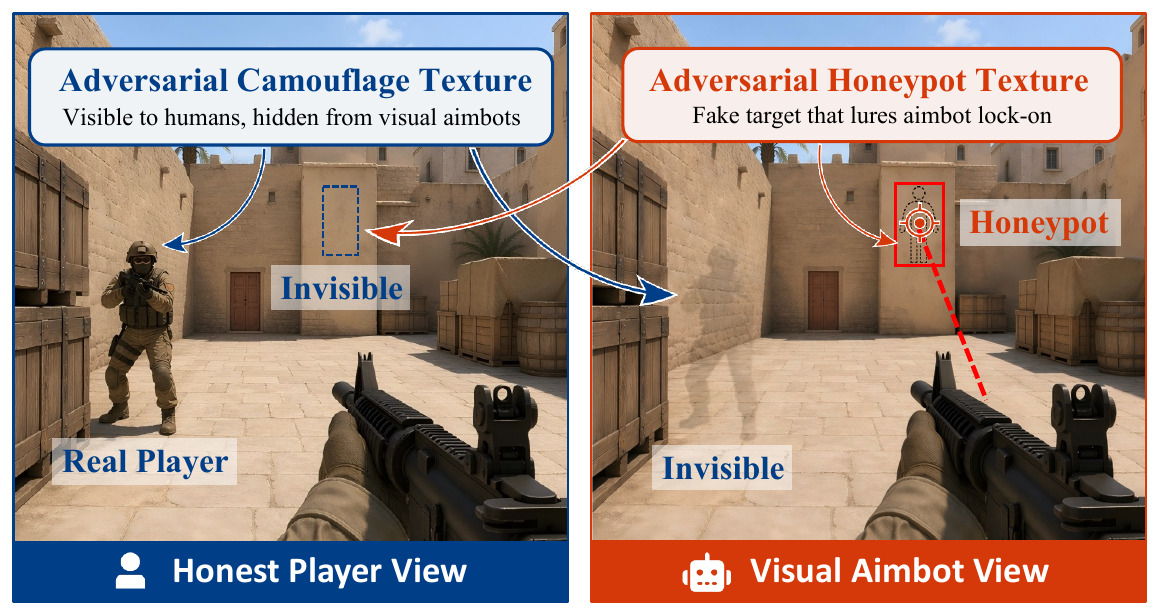
Two mechanisms

Hide the real player.
Turn the map into a trap.

AimTrap changes static game textures in two ways. ACT makes real players harder for the aimbot to find. AHT makes ordinary surfaces look like targets to the aimbot, so it aims where no player exists.

An honest player sees an enemy and a normal wall, while the aimbot misses the camouflaged player and finds a fake target on the wall.
The same scene, seen in two ways. The human player sees an enemy and a normal wall. The aimbot is less likely to find the enemy wearing ACT, but it sees the AHT on the wall as a player target. Click any figure to enlarge.
AHT

Lure the aimbot

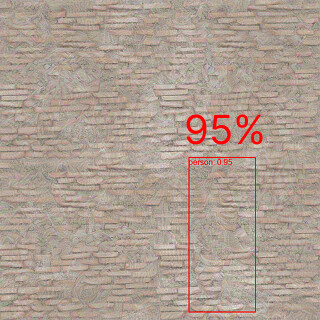
An AHT is a normal-looking texture placed on a wall or another part of the map. The aimbot sees one clear player target where no player exists. When it repeatedly locks onto that target, the behavior remains in the replay log for AimTrap to examine after the match.

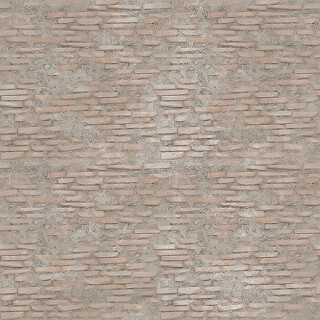
Original CS2 brick wall texture.
Original asset
Adversarial honeypot texture with a YOLO detection box reporting 95% person confidence.
AHT — person 95%
ACT

Hide the real player

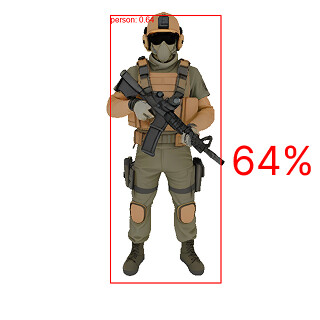
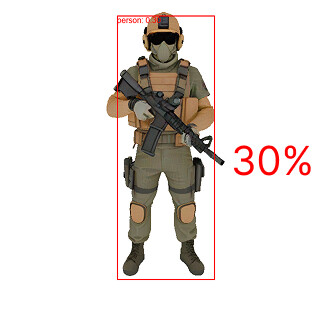
An ACT replaces the original texture on a player model. In the evaluation, it lowered the aimbot's mean confidence from 62.3% to 16.0%, below the default 40% threshold, while remaining visually close to the original texture.

Player model with the original texture, detected at 64% confidence.
Original — 64%
Player model wearing the adversarial camouflage texture, detected at only 30% confidence.
ACT — 30%

Changing the aimbot's confidence threshold does not provide a simple escape. A lower threshold helps the aimbot find players wearing ACT, but also makes it more likely to aim at AHTs. A higher threshold avoids some AHTs, but makes ACT-protected players even harder to find.

How it works

Prepare before the match.
Detect after it.

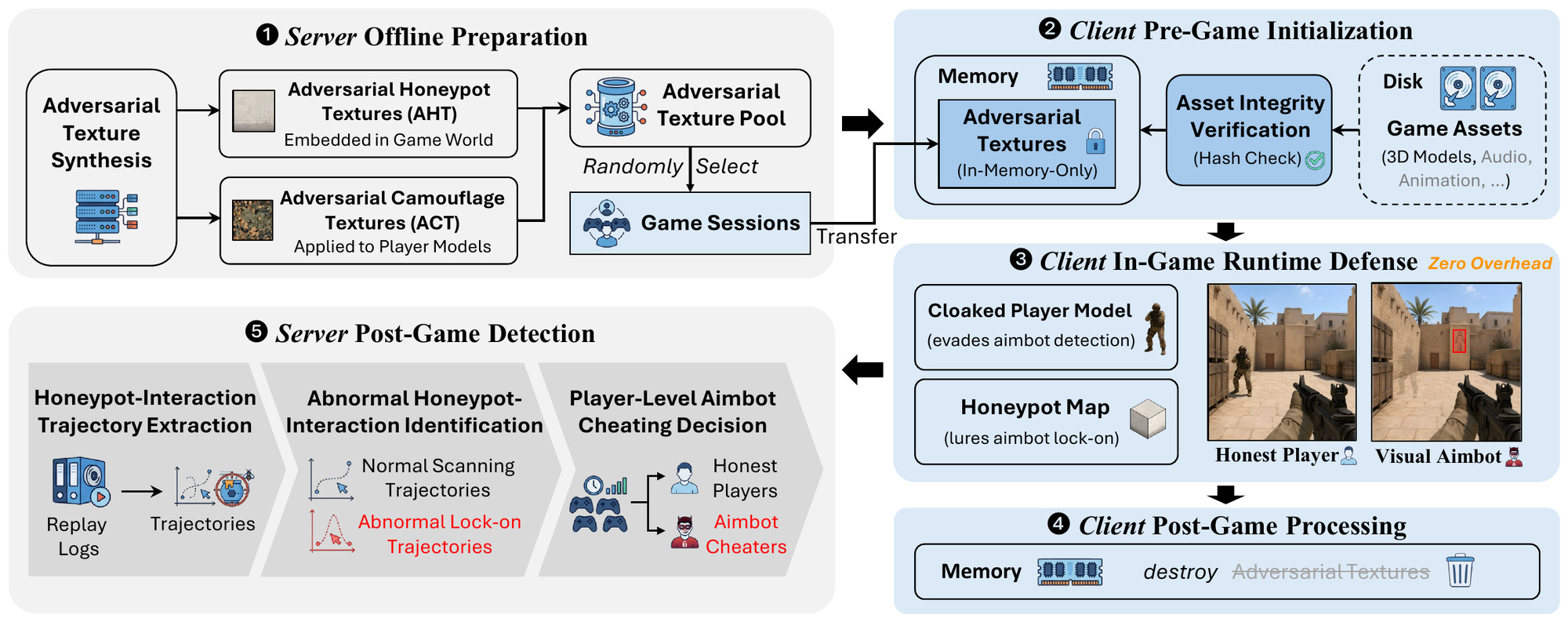
AimTrap system overview: server-side offline preparation, client-side pre-game initialization, in-game runtime defense, post-game teardown, and server-side post-game detection.
Five phases from preparation to detection. The server creates a pool of textures before the match. The client receives a random selection, uses them as ordinary game assets during play, and discards them afterward. The server then checks the replay log for aimbot behavior.
Component 01 · Server, offline

Synthesize robust textures offline

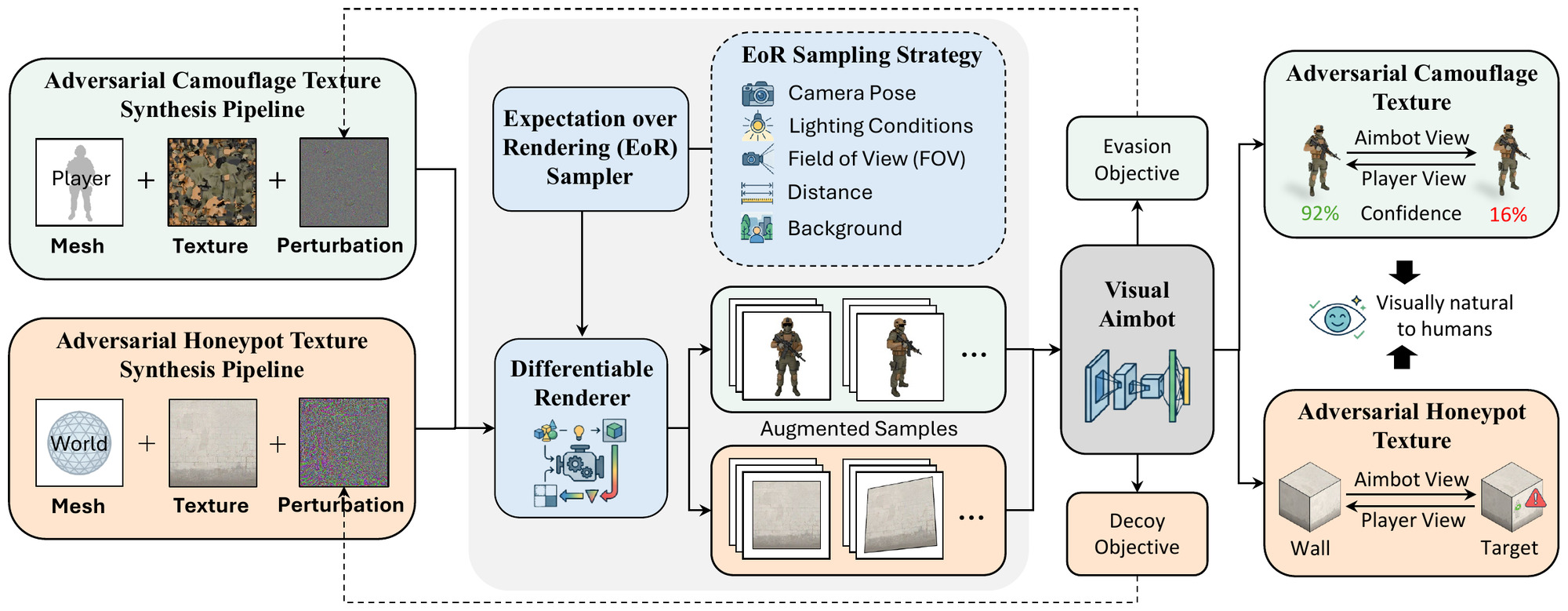
The server starts with a normal game texture and changes it through a differentiable renderer. Expectation over Renderings shows each candidate at different distances, viewing angles, and lighting conditions; ACT training also uses different backgrounds. A YOLOv5n proxy model guides the process. For ACT, the goal is to make the player harder to find. For AHT, the goal is to create one clear fake target with a stable detection box. The changes stay within a fixed range around the original texture. On average, one AHT takes 12.05 s to create and one ACT takes 74.95 s. This work happens offline, and each finished texture can be used in many matches.

The texture synthesis pipeline renders candidate player and map textures under varied game conditions and uses a proxy detector to guide the changes.
The same pipeline creates both textures. It lowers the detector's confidence in a real player for ACT and raises its confidence in one fake target for AHT.
Component 02 · Server, post-game

Find honeypot lock-ons in replay logs

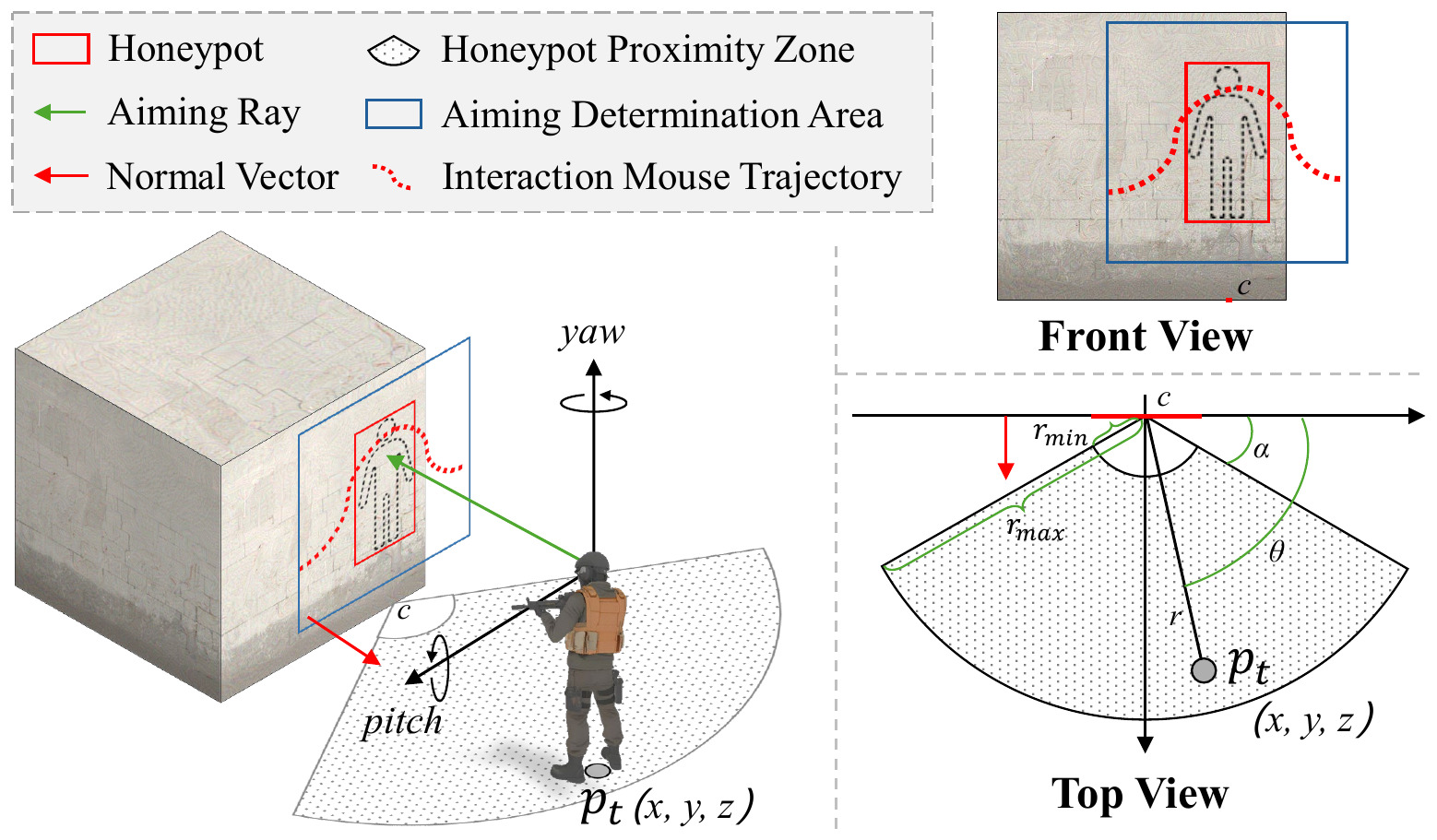
After a match, the server reads the standard replay log. For each honeypot, it keeps the moments when the player is within the chosen distance and viewing angle and the player's view ray reaches the area around the honeypot. It joins nearby moments into an aiming trajectory. A bidirectional LSTM decides whether each trajectory looks like an aimbot lock-on, and AimTrap combines these decisions for the final player-level result. No new gameplay logging or storage is required.

AimTrap keeps replay moments when a player is near a honeypot and the player's view ray reaches the area around it.
How AimTrap finds an interaction. The player must be inside the honeypot proximity zone, and the view ray must reach the aiming determination area. The points where that ray meets the wall form the 2D trajectory used for detection.
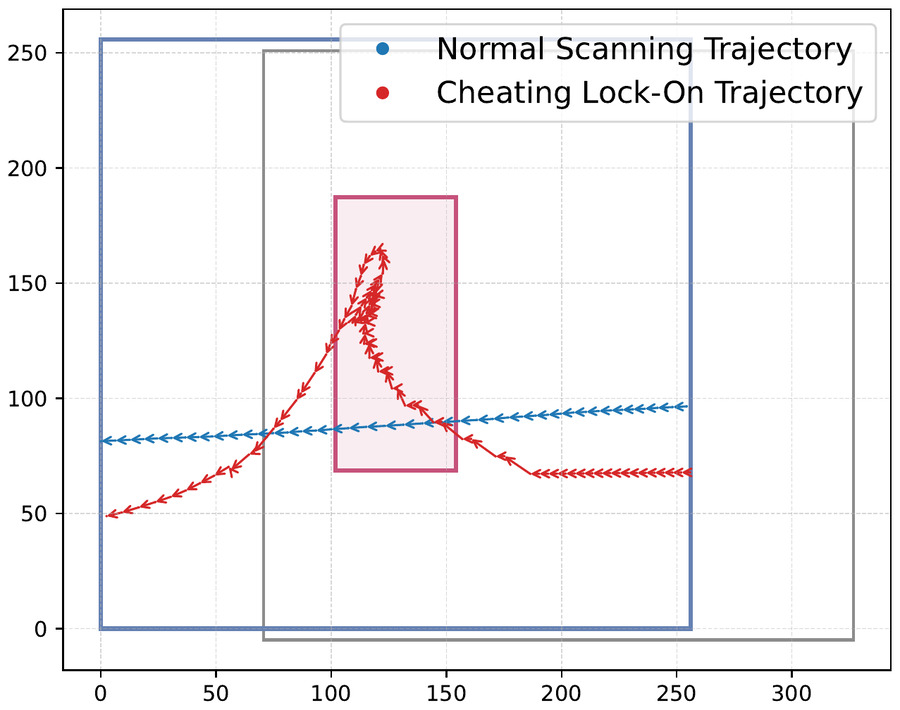
Aimbot trajectories in red move toward the honeypot, while human trajectories in blue pass across the scene.
A visible difference in aiming behavior. The red aimbot trajectories move toward the honeypot and stay near it. The blue human trajectories pass through the scene without remaining on the honeypot.
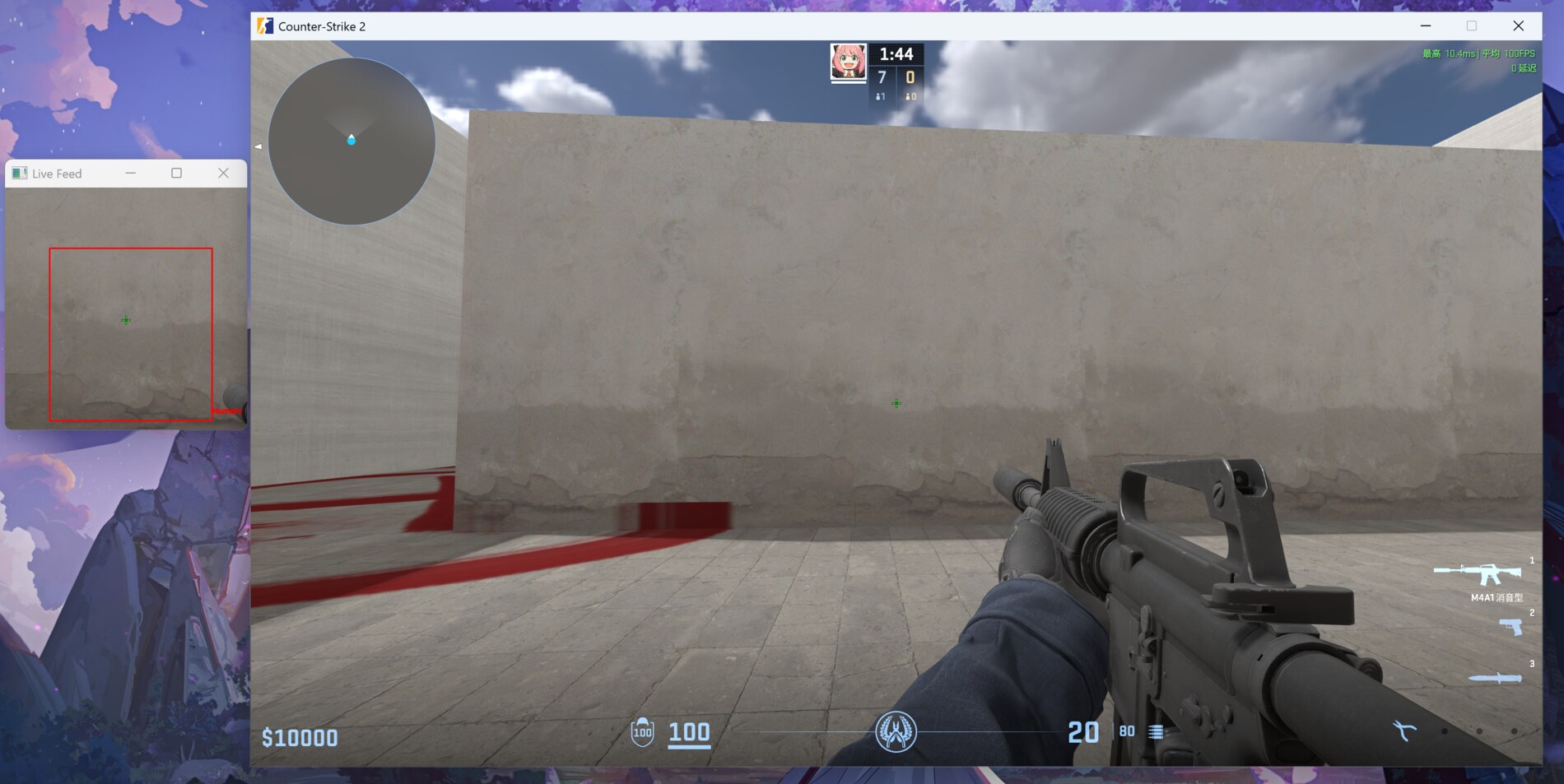
The Counter-Strike 2 scene looks like a blank wall to the player, but the aimbot marks the wall as a human target.
What the aimbot sees. The wall looks ordinary to the player, but the aimbot labels the AHT as a Human and moves the crosshair toward it.
Proof of concept

Tested in a custom Counter-Strike 2 map.

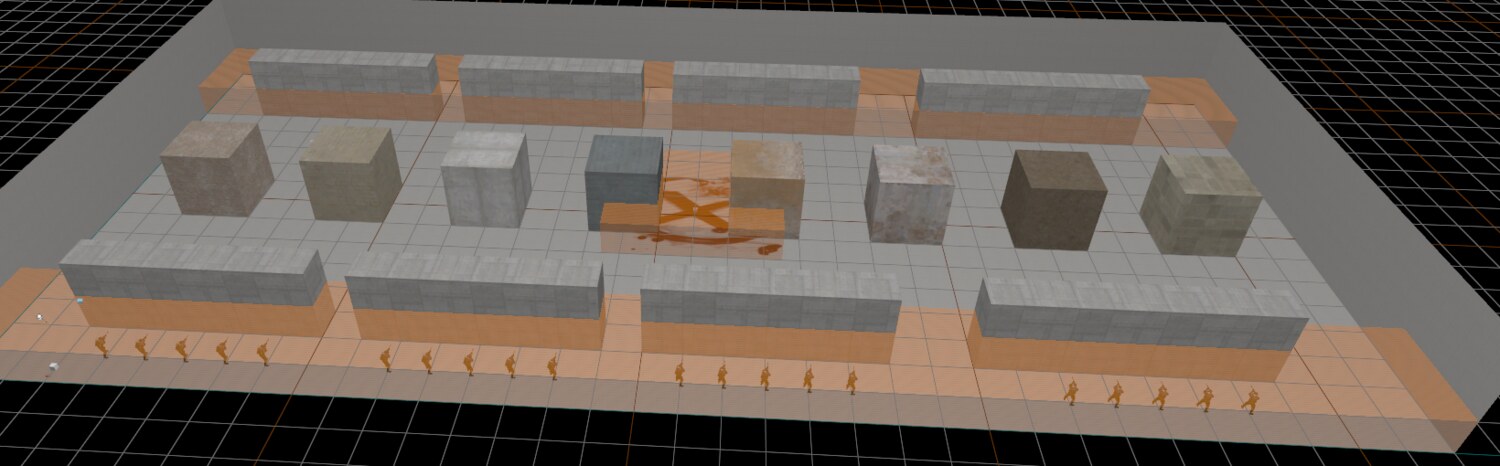
We built the map with Valve's Hammer editor and based its layout on the classic iceworld map. We placed 16 AHTs at different locations. Because the server knows the map geometry, it can reconstruct where each player stood and where each player aimed from the replay log.

Top-down view of the custom Counter-Strike 2 test map: an arena of walls and blocks carrying different honeypot materials, with a row of player models along one edge.
The test map from above. Its walls and blocks carry 16 AHTs that players encounter from different positions, distances, and viewing angles.
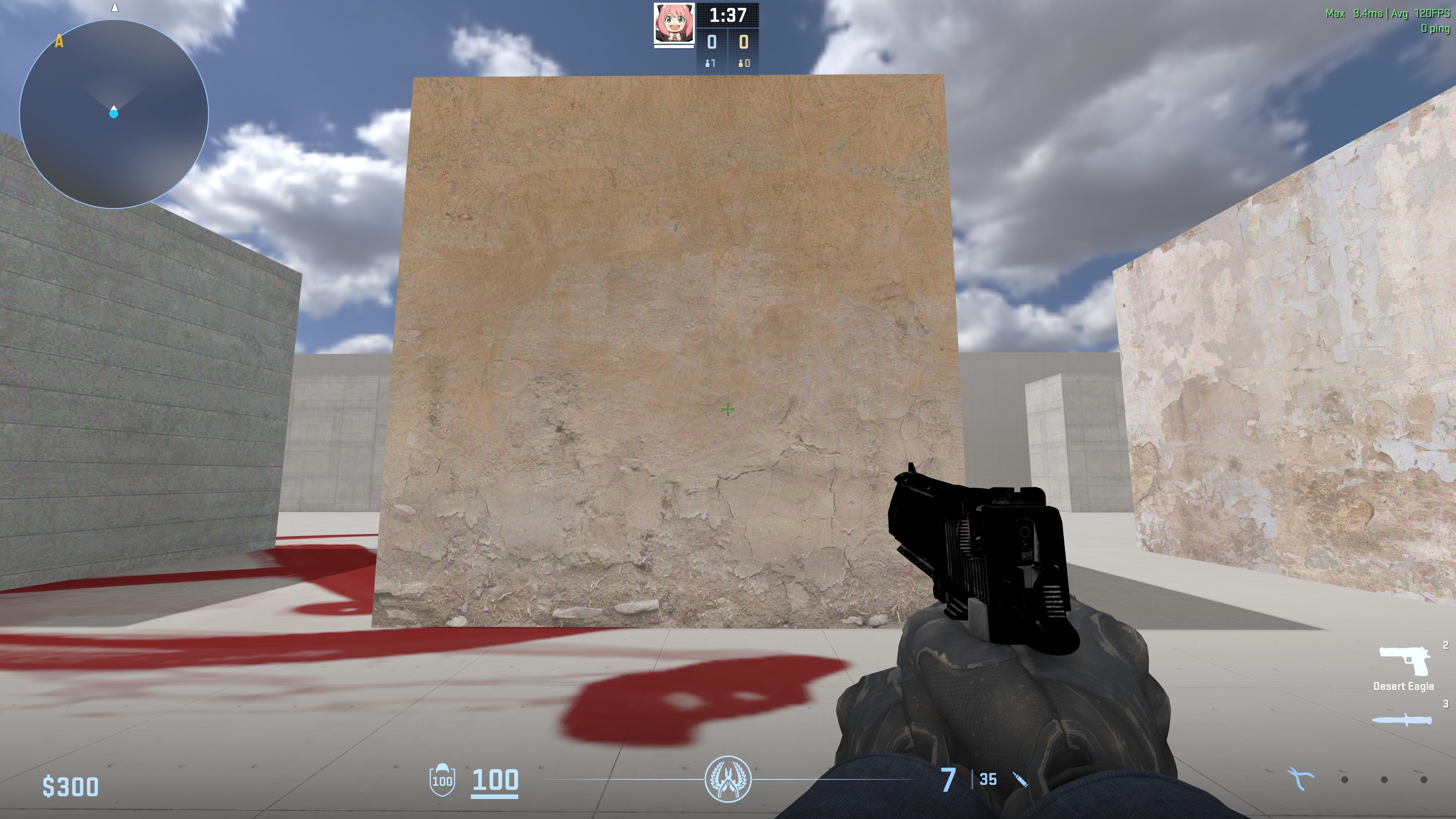
First-person Counter-Strike 2 screenshot: a sand-colored wall carrying an adversarial honeypot texture, which looks like ordinary dirt and stone to the player.
An AHT on a dirt wall. It looks like part of the wall to a human player, but the aimbot can read it as a player target.
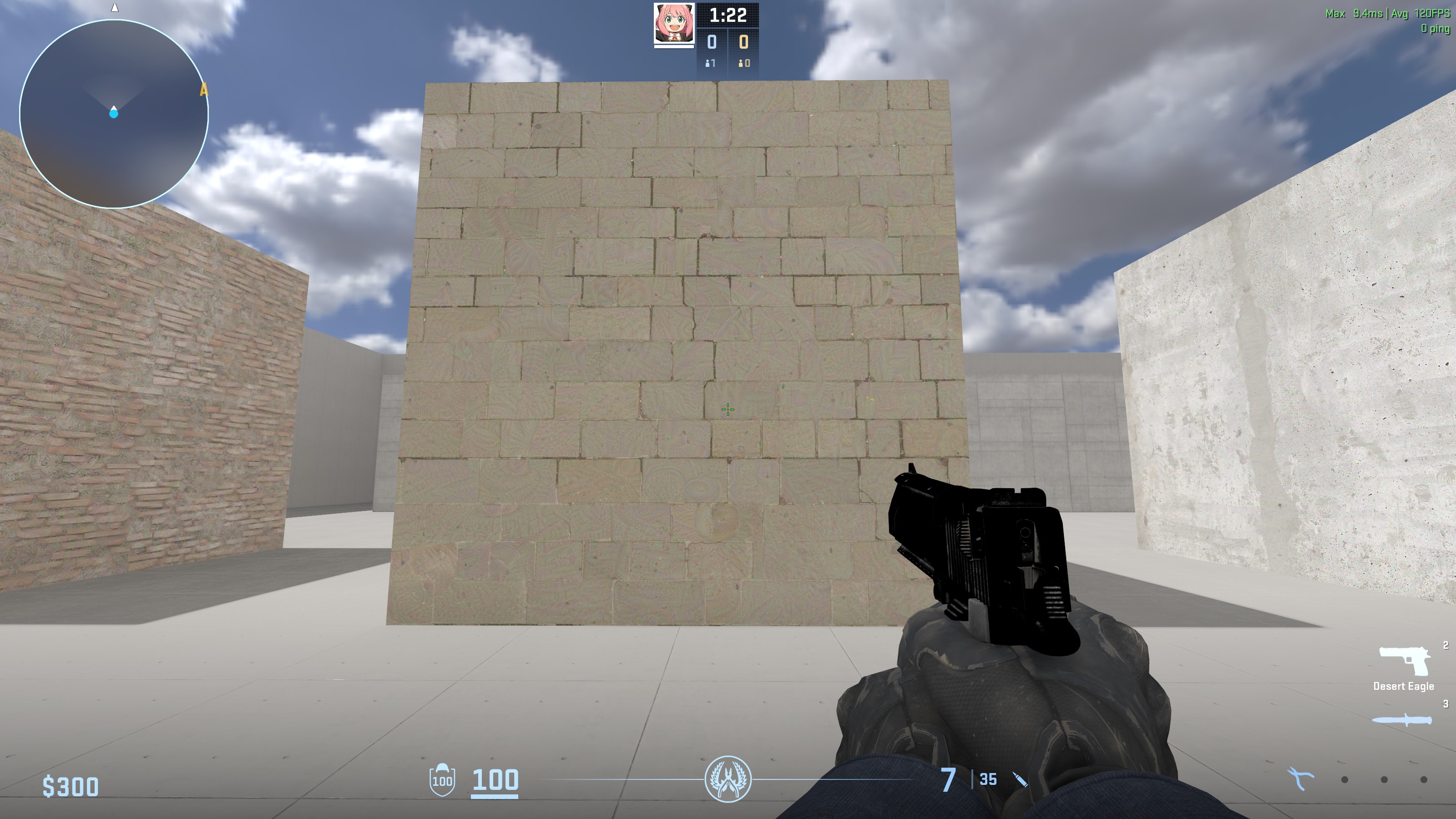
First-person Counter-Strike 2 screenshot: a brick wall carrying a second adversarial honeypot texture that visually blends with the wall.
An AHT on a brick wall. The texture still looks like a brick wall to the human player, while the aimbot sees a fake player target.
Evaluation

Results from rendered scenes and real matches.

The texture experiments used 51,200 rendered scenes for ACT and 122,880 for AHT. Most tests used YOLOv5s as the model inside the aimbot. The real-game study included 20 paid participants who did not know the purpose of the study. Each person played one match without cheating and one match with a visual aimbot that smooths its mouse movement.

What was measuredScaleResult
Honeypot decoy success (AHT)240 AHTs · 122,880 EoR samples96.9%
Player evasion success (ACT)40 ACTs · 51,200 EoR samples85.1%
Trajectory classification accuracy3,074 trajectories98.05% 99.29% AUC-ROC
Cross-model AHT transfer7 detector models · ENS + MI + TI86.9% DSR +8.0 pp
In-game runtime defenseStatic texture replacementNo extra per-frame computation no measurable FPS loss
Real-match verdicts40 matches · 20 players40 / 40 correct 0 false flags
Deployability

The paper's operating point requires at least three abnormal interactions in each of two matches. With 15 interactions per match, the estimated player-level false-positive rate is 4.4×10⁻⁵, while recall remains close to 100%.

Player impact

In a questionnaire study with 113 participants, the textures did not reduce players' ability to see character models or make walls look like human targets. Participants also found the changed textures difficult to tell apart from the originals, and most rated both versions as equally natural.

Scope

AimTrap is designed for visual aimbots and requires maps where developers can place AHTs and access the map geometry. It can work alongside broader behavior detectors that also look for memory-based aimbots and wallhacks.

The paper reports the complete results for each texture type, detection threshold, participant, model-transfer test, performance measurement, and user-study question.

Citation

BibTeX

@inproceedings{wang2026aimtrap,
  title     = {Shoot the Honey, Cloak the Player: Towards
               Zero-Runtime-Overhead Proactive Defense and
               Detection for Visual Game Cheating},
  author    = {Wang, Jianing and Zhang, Chuqi and
               Jiang, Yuancheng and Ahmad, Adil and
               Guo, Shanqing},
  booktitle = {Proceedings of the 2026 ACM SIGSAC Conference on
               Computer and Communications Security (CCS '26)},
  year      = {2026},
  doi       = {10.1145/3830454.3846522},
  isbn      = {979-8-4007-2871-6},
  location  = {The Hague, Netherlands},
}